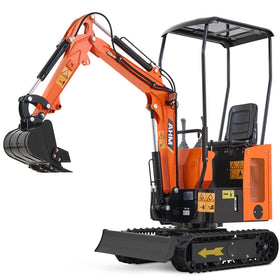
If you are like most first-time buyers, you are not in a position to pay cash for a mini excavator- that is simply not realistic. What you need, and what most people go for, is a suitable financing plan that helps you preserve working capital, keep cash available for expenses like payroll and fuel, and get you into a machine that starts generating income immediately.
The problem, though, is that mini excavator financing can be rather complicated, and it can become a burden rather than a tool for growth if you choose wrongly. The key is to explore all the financing options available, choose a suitable financing plan, understand the numbers thoroughly before signing, and to trust the process.
Buying your first mini excavator can actually be one of the smartest moves you make if you work in landscaping, construction, trenching, grading, utility work, or property development.

Mini Excavator Financing Options and Rates to Explore
There are five main options when it comes to mini excavator financing: loans, leases, dealer programs, equipment lenders, or alternative funding sources.
Each of these options comes with different down payment requirements, rates, approval standards, and ownership outcomes. To choose the best option, consider your credit profile, the history of your business, your monthly cash flow, and how often you plan to use the machine.
1. Traditional Bank Equipment Loan
A bank equipment loan is often one of the cheapest forms of financing a mini excavator. Banks typically offer lower interest rates than many alternative lenders because they prioritize borrowers with strong credit and steady income.
Usual Terms and Rates:
In general, traditional banks require a credit score of about 680+ for equipment loans, and the loans usually come with the following terms:
- 3 to 7 year repayment terms
- Rates are often around 6% to 10% for qualified borrowers
- Down payment may range from 10% to 20%
With a traditional bank equipment loan, you can get favorable options like a $45,000 used mini excavator financed over 5 years, or even a $70,000 new machine financed over 6 years.
The only setback with a traditional bank equipment loan is that you have to be a qualified borrower to access it. Usually, it is weak credit and low income flow that prevent people from going for it.
However, bank equipment loans remain a fantastic, lower-pressure financing option for established businesses and people with strong personal or business credit.
2. Dealer Financing Programs
Many mini excavator brands and dealerships like AHM, John Deere, and CAT offer in-house or partner financing. This can be one of the easiest ways to buy because they often offer some very favorable promotional rates for new equipment or during promotion seasons, sometimes as low as 0% APR for 36 to 60 months.
Usual Terms and Rates
- 0% promotional offers for short terms (qualified buyers)
- Standard rates are often 5% to 12%
- Terms commonly 24 to 72 months
The only setback with dealer financing options is that there are sometimes some dealer "convenience fees" and origination costs that can tack on an extra $5,000+ to the original purchase price. So, it is pivotal to read the fine print if you choose this option.
However, dealer financing programs are definitely worth looking into if you are specifically wanting to buy a new mini excavator, a contractor wanting fast approvals, or just prefer the convenience of financing and buying from the same place.

3. Equipment Finance Companies
If you are a startup or do not qualify for dealer credit, brokers (such as Crestmont Capital or Global Financial) can secure loans. These are lenders that specialize in heavy equipment, and they often approve borrowers that banks decline, especially newer businesses.
Usual Terms and Rates
In general, equipment-specific lenders can work with scores as low as $500 to $550, but you should expect higher interest rates and potentially larger down payments. Here are some of the usual terms and rates:
- 7% to 18%, depending on risk
- Terms from 2 to 7 years
- Flexible structures available
Consider equipment financing companies if you are just starting your mini excavator business, or if you have average credit but have reason to be confident of your business prospects.
4. Rent-to-Own (RTO)
Many mini excavator leasing companies offer what is known as a Rent-to-Purchase Option. You rent the machine for 6 to 18 months, and the dealership applies 80% to100% of those rental payments toward the final purchase price.
This is an attractive option because it lets you use the excavator while making monthly payments, usually with a lower upfront cost. At the end, you may return it, renew it, or buy it, depending on the lease structure.
Usual Terms and Rates
- 24 to 60-month leases
- Lower monthly payments than loans in many cases
- Buyout may be $1, a fixed amount, or fair market value
Though not as “official”, an RTO is a practical and relatively accessible financing option for businesses wanting a low upfront cost, companies upgrading often, and users wanting predictable expenses.
5. SBA Loans (for U.S. Buyers)
Small Business Administration-backed loans are also available for heavy equipment, and they can help businesses secure better terms through partner lenders. An SBA loan is also a perfect solution for businesses with decent records but limited collateral.
Usual Terms and Rates
Usually, they come with competitive rates and longer repayment periods, but there is usually a lot of paperwork to be done, and the approval process is really slow.
However, an SBA loan can be another viable low-pressure option for an excavation company that is growing (hence can afford the wait), and looking to buy its first owned machine.
Choosing the Best Mini Excavator Financing Option: Guide
| Buyer Type | Best Financing Option | Why |
| Strong credit, established business | Bank Loan | Usually lowest rates |
| Buying new equipment | Dealer Financing | Promotions and convenience |
| Startup or newer company | Equipment Finance Company | Flexible approvals |
| Want a lower upfront cost | Lease | Preserve cash |
| Growth-focused business | SBA Loan | Longer terms and manageable payments |
| No business credit yet | Personal Funding | Last-resort access to capital |
AHM Mini Excavator Financing Financing Options
Explore AHM's flexible payment options, with lower upfront costs and quick and instant decisions.
To facilitate your purchase and offer more flexible payment options, AHM Corps partners with trusted financing options like Shop Pay and Klarna to offer quick, easy, and flexible financing solutions, making it easier for you to bring top-quality tools into your business or projects.

Financing New vs Used Mini Excavators
Financing a New Mini Excavator: Pros, Cons, and When to Do It
If a dealer runs a promotional 0% for a reasonably long time (usually about 48-60 months), it is better to finance a new mini excavator. This is known as the "Zero Percent" rule, and it is attractive to many buyers because it builds equity without incurring interest costs
The main pros of financing a new mini excavator are that it requires less maintenance and comes with comprehensive warranties, saving you from expensive hydraulic or engine repairs on day one.
You may also get tax write-offs. If you operate an LLC, financed equipment can qualify for major tax advantages. Ask your accountant about Section 179 depreciation deductions.
The setback with financing a new mini excavator, however, is that you will carry a permanent monthly payment, and missing out on cash discounts can add thousands to the bottom line.
Explore a complete guide on how to buy your first mini excavator.
Financing a Used Mini Excavator: Pros, Cons, and When to Do It.
If interest rates are high, it is better to buy a used mini excavator in cash. This is known as the “cash is king " rule, because it takes away the pressure of the monthly fixed costs for the machine. So, if you have a slow week, you are not under pressure to pay the bank.
Also, the new machine takes the hardest hit to its value in the first few years. Buying used lets the previous owner eat that cost.
The downside of buying a used mini excavator is that used machines (especially residential machines nearing the 3,000 to 5,000 hour mark) carry high risks of needing expensive hydraulic pump replacements, new undercarriages, or engine work.

Pro Tips for Financing Your Mini Excavator
The first and most important advice when exploring mini excavator financing is this: do not think about owning your mini excavator until you get to the point where you are certain that the machine will generate enough workflow to cover its monthly payments. It is only at this point that you should even begin considering financing options.
1. Buy Based on Revenue, Not Emotion
Do not make the mistake of financing the biggest machine you can get approved for, rather than the one you can comfortably afford to pay for.
In other words, finance the machine that matches the jobs you actually book. A smaller excavator with lower payments can be more profitable than an oversized machine sitting idle.
3. Know Your Monthly Break-Even Number
Before signing, calculate all the costs of the mini excavator, including the loan payment, insurance, fuel costs, maintenance, trailer, and transport, etc. Then ask: how many billable hours per month does the machine need to cover costs?
This one calculation alone has prevented many bad purchases.
3. Consider Used Machines Carefully
A quality used mini excavator can save tens of thousands of dollars. But thoroughly inspect the number of hours it has been operated for, undercarriage wear, hydraulic leaks, pins and bushings, service records, engine cold start behavior, etc. In many cases, a cheaper machine with major repairs can cost more than buying a newer one.
4. Improve Your Approval Odds by Being Thorough
Lenders like thorough and well-prepared documentation. They see it as a sign of diligence and trustworthiness. Bring along your bank statements, tax returns, proof of contracts or jobs booked, business registration, down payment funds, and everything else they might need. The cleaner your file looks, the better your odds and terms.
Pros and Cons of Owning Your Own Mini Excavator
By owning your own mini excavator, you gain equity, the machine becomes a tax deduction via depreciation, and you control your own schedule. Renting the same size machine can often cost more per month than making a loan payment.
Consider the following pros:
- More control over scheduling: You do not have to wait for rental availability or return deadlines.
- Builds business assets: You are paying into something you own instead of only paying rental fees.
- It is easier to take small jobs: Quick one-day or half-day jobs become more practical when you already own the machine.
Cons
The main cons of owning your own mini excavator are the pressure to meet monthly payments, hefty maintenance costs (track replacement, hydraulic cylinders), and full-coverage insurance. Startups frequently complain about negative cash flow if they have too few jobs to keep the excavator.
- Monthly payments continue during slow periods: Rain, winter slowdowns, or dry job pipelines do not stop the payment.
- Repairs are your responsibility: Tracks, hydraulics, pins, seals, batteries, and maintenance add up.
- Transport and storage costs: You may need a heavier truck, trailer, yard space, or security setup.
- Depreciation: Machines lose value over time, especially if you use them frequently for heavy projects.
When Is Owning a Mini Excavator Worth It?
Owning usually makes sense when you rent one regularly, you find yourself turning down jobs because you lack equipment, you can keep it busy most months of the year, your market has steady demand, and you need flexibility and fast deployment.
A common rule of thumb: if you rent frequently enough that payments would be similar to monthly rental costs, it may be time to explore ownership.

Final Thoughts
Financing your first mini excavator is less about “Can I get approved?” and more about “Does this machine improve my business profitably?” The best financing deal is not always the lowest payment or easiest approval. It is the option that gives you reliable equipment, manageable costs, and enough cash left over to run your business well.
Choose carefully, run the numbers honestly, and your first mini excavator can become a tool that earns far more than it costs.
You may also be interested in our cost-benefit analysis of buying vs renting a mini excavator.