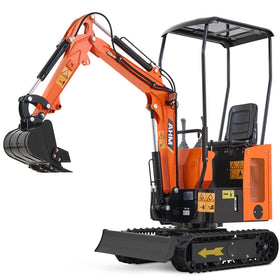
On average, a standard mini excavator (in the 3-4-ton range) can dig between 50 and 200 cubic yards of loose dirt in an eight-hour workday. If you're working with a mid-sized mini excavator (think 3–5 tons) on reasonably loose, undisturbed soil, a realistic daily target is around 100–150/200 cubic yards a day.
To put that in perspective, a standard dump truck holds about 10–14 cubic yards of material. So on a productive day, a mini excavator can fill roughly 7 to 15 truckloads.
This is a pretty wide range, and that is because there are many other factors that influence the final number. If you are digging a standard utility trench, for example, this range can go up to about 200 to 300 linear feet of trenching per day, depending on the depth of the trench, and if you are using a smaller mini excavator (under 2 tons), you may only dig up to 50 cubic yards a day.

Daily Digging Capacity For Different Mini Excavator Sizes
The digging capacity of a mini excavator is proportional to its size, meaning that bigger-sized mini excavators can dig more in a day than smaller-sized units. In fact, the numbers shift noticeably as you move up through the weight classes. Here's how production typically breaks down:
1. Small Mini Excavators (Under 2 Tons)
A small mini excavator under 2 tons (micro excavator) can dig up to 30-70 cubic yards per day with a bucket capacity ranging from 0.03 to 0.6 cubic yards. This relatively low daily digging capacity is because these micro excavators are built for precision and maneuverability in tight spaces, not volume. So, they are slower per cycle and physically can't carry as much material per scoop, but they shine in situations where nothing else fits.
If you're digging a small utility trench in a cramped backyard or creating a planting bed near a building foundation, a sub-2-ton machine gets the job done without tearing up the lawn, but it will not be setting any volume records.
The AX-16 23 HP 1.3 ton mini excavator has a 70.6-inch digging depth and a 9'6" radius; its 3'3" body excels in tight spaces. The reduced tail-swing design ensures minimal ground disturbance and easy transport. If you need a machine that prioritizes high-demand performance and transportability, this is the one.
2. Standard Mini Excavators (3–5 Tons)
On a normal workday with good soil conditions, a standard mini excavator in the 3-5 ton weight class can typically move 80–150 cubic yards. If you are a skilled operator working with a mini excavator on the 5-ton end of this range, and the ground conditions are ideal, you can push toward 150–180 cubic yards on a great day.
Standard mini excavators in the 3–5-ton class generally offer a meaningful bump in bucket capacity (typically 0.06 to 0.15 cubic yards) and significantly more digging force than their smaller siblings. This explains why most contractors reach for it when digging swimming pools, installing septic systems, excavating for footings, or clearing land for small builds.
3. Large Mini Excavators (6–8 Tons)
A 6–8-ton mini excavator in reasonable condition can move, on average, about 150–250+ cubic yards in a day. On soft or loose ground, that number can climb even higher.
Large mini excavators can be paired with higher-capacity buckets (usually 0.15 to 0.25 cubic yards), usually have considerably more hydraulic power, and are capable of tackling harder materials and deeper excavation than their lighter counterparts.
These machines are often used for commercial utility work, road construction, drainage projects, and site preparation, where a compact footprint is still needed, but production demands are greater.
Mini Excavator Daily Digging Capacity By Size
| Mini Excavator Size/Model | Daily Digging Capacity | Example Models | Notes |
| Micro Excavators (Under 2 Tons) | 5 to 20 cubic yards in a day | AX-17 1.6-ton Mini Excavator | They are typically reserved for light use |
| Standard Mini Excavators (3 to 5 Tons) | 64 to 100 cubic yards in a day | Cat 303, Kubota KX040 | These are large enough for rental projects |
| Large Minis / Midi Excavators (6 to 8 Tons) | 100 to 150 cubic yards in a day | Kubota V2607T | Can dig more, especially if paired with a dump truck or skid steer to clear the spoil pile. |
How Much Can a Mini Excavator Dig In a Day? Factors That Matter
Now that you have a sense of the baseline numbers, let's talk about what moves those numbers up or down. As we go through them, keep in mind that these factors don't operate in isolation: they compound each other. A skilled operator working in soft soil with a freshly serviced machine will dramatically outperform an inexperienced operator fighting through clay with a worn bucket any day of the week.
1. Soil Type and Ground Conditions
Soil is the single biggest variable that determines how much a mini excavator digs in a day. As a rule, digging in soft loam is incredibly fast, but digging in hard-packed gravel, thick clay, or frozen frost lines slows the machine down significantly.
- Loose, sandy, or well-amended soil offers very little resistance to the bucket, and a standard mini excavator might complete a digging cycle in 20–25 seconds. Cycle times are faster, and you will be able to dig more in a day.
- In hard clay, compacted fill, rocky ground, or soil with high root content, you are forced to pry at the earth in shorter, more deliberate movements and sometimes rip or break materials before scooping them. That same cycle can take 40–60 seconds or more. That slowdown cuts daily production by 30–50% in tough conditions.
- Rock is the most extreme case. If you're hitting significant rock, production can drop to a fraction of what it would be in normal soil, and you may need a hydraulic breaker attachment before the bucket can even make progress.
2. The Operator’s Skill and Experience
A seasoned professional will easily move twice as much dirt in a day as a first-time renter. In fact, if you are renting a machine for the weekend with zero experience, expect to spend the first 1 to 2 hours just developing muscle memory.
- A seasoned operator might complete 90–110 cycles per hour on a straightforward dig.
- A newer operator on the same machine with the same soil might manage 60–70 cycles per hour.
- Over an eight-hour day, that gap translates to a production difference of 20–35%.
Skilled operators develop an intuitive feel for the machine's capabilities: they know how hard to push the bucket, how to angle the arm for maximum efficiency, how to position the tracks to minimize repositioning, and how to sequence their movements to reduce wasted motion.
3. Bucket Size and Attachment Type
The bucket that comes standard on most mini excavators is a general-purpose digging bucket, and it's usually well-matched to the machine. But bucket selection still matters.
- Using a bucket that's too large for the machine's hydraulic capacity forces the operator to dig partial loads, negating the size advantage.
- A bucket that's too small means more cycles to move the same amount of material.
For soft to medium soils, a slightly larger-than-standard bucket can increase production by 10–20% with no meaningful slowdown. In hard or rocky ground, a smaller, reinforced bucket with replaceable teeth will outperform a big general-purpose bucket because it bites more aggressively with less resistance.

4. The Swing Factor
The type and reach of your mini excavator swing boom also matter. If you can dump dirt right next to your trench, you will move fast. If you have to swing the cab 180 degrees every single time to load a trailer or clear an obstacle, your daily volume cuts in half. Where the spoil pile or dump truck is located relative to the digging zone has a measurable effect on cycle times.
On jobs where material needs to be moved far from the excavation area (stockpiled across a job site) what some operators use a combination approach:
- The mini excavator digs and piles nearby,
- A skid steer or loader moves material to the final dump point.
This keeps the excavator in its most productive mode (digging) and prevents cycle time from bloating due to hauling inefficiency. A poor haul setup can reduce digging productivity by 15–25% compared to an optimized layout.
5. Machine Size and Hydraulic Power
Again, the mini excavator's size class directly determines bucket capacity and digging force. But hydraulic power deserves its own mention because two machines that weigh the same can perform quite differently depending on their hydraulic system design.
When comparing machines in the same weight class, a model with higher hydraulic flow (measured in gallons per minute) will generally produce more in a day than a lower-flow competitor, especially in harder digging conditions.
A mini excavator with higher hydraulic flow rates has faster arm movements and quicker bucket curl, and this will shorten cycle times even if bucket capacity is identical.
6. The Layout and Accessibility of the Job Site
A clean, well-organized job site is a productive job site. Obstacles like utility lines, tree roots, existing structures, and poorly placed stockpiles all force the operator to slow down, reposition, or work at awkward angles that reduce digging efficiency.
On a wide-open site with clear access, a mini excavator can work at near-peak production all day. On a cluttered urban site with multiple obstacles, frequent repositioning, and tight swing angles, production can drop by 20–40%. The machine hasn't changed; the environment has.
 How to Dig More with a Mini Excavator in a Day
- Rent larger if you can: If you are debating between two sizes, spend the extra money to step up a size. A larger machine gives you a wider bucket, better stability, and a heavier counterweight, saving you hours of frustration.
- Manage your dirt: Keep a skid steer or a helper with a dump cart nearby. Mini excavators quickly dig themselves into a corner if there isn't another machine moving the loose dirt away from the hole.
- Plan your dig before you start. Spend a few minutes at the start of each day mapping out your excavation sequence, truck or spoil pile positioning, and staging areas. A five-minute planning session can save hours of repositioning and backtracking throughout the day.
- Keep the bucket teeth sharp. Dull teeth make every dig harder and slower. Check your teeth at the start of each shift and replace or rotate them when they show significant wear. The time spent changing teeth pays for itself in the first hour of work.
- Minimize swing angle when possible. Position your machine so that dump locations are within a 90-degree swing rather than a full 180 degrees. This single adjustment can shave 5–10 seconds off every cycle, which adds up to a meaningful gain over a full day.
- Work in layers on tough material. When dealing with hard clay or compacted fill, trying to take full-depth bites often stalls the machine or leads to partial bucket loads. Taking two or three shallower passes often moves more material per hour than fighting through deep bites.
- Keep the machine serviced and fueled. Running low on fuel leads to downtime. Skipping scheduled maintenance leads to sluggish hydraulics or unexpected breakdowns. Build service checks into your morning routine.
- Match the bucket to the material. If you're always working in the same type of soil, it's worth investing in a bucket optimized for those conditions rather than relying on a general-purpose bucket for everything.
- Use a skilled operator. If the budget allows, putting your most experienced operator on the machine for the most demanding portions of a dig will yield measurably higher output than having a newer operator figure it out on the job.
How to Choose a Small Mini Excavator for Quick Digging
If your priority is getting in and out fast in tight spaces ( landscaping, utility work, residential foundation repairs, or narrow trench digging), a small mini excavator (under 2 tons) can be the right tool. But not all small machines are built the same, and choosing one thoughtfully makes a real difference in daily output.
Ultimately, the best small mini excavator for quick digging is the one that fits your job sites, matches your transport setup, and gives you the hydraulic performance to maintain fast cycle times throughout the day. Rent before you buy if you're not sure: a day or two on a job with a machine tells you more than any spec sheet.
You may also be interested in how to dig footings with a mini excavator.