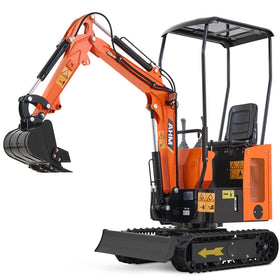
The number of hours on the hour meter is undoubtedly a good measure of how a mini excavator has been used. You definitely want to know how much wear the engine, hydraulics, undercarriage, and major components have experienced over time.
However, as much as it is important to check the number of hours, it is also important to keep in mind that a machine’s life depends heavily on how it has been used and serviced, rather than just the meter.
So, what the meter gives you is a reference: there are other factors to consider before making your conclusion on the value and prospects of the machine.
That being said, how many hours is too much? When should you be worried?

How Many Hours Is Too Much For a Mini Excavator?
The consensus in the heavy equipment world is that a mini excavator is “high-houred” past 5,000 to 6,000 hours, especially if the machine has not had major repairs or excellent maintenance.
Take note that this does not automatically mean that the machine is bad: components can sometimes last up to 8,000-10,000 hours with good maintenance. However, at this point, the likelihood of expensive repairs increases significantly.
Mini excavators are evaluated based on meter hours all the time, and the general practice is usually to classify them into low hours, ideal hours, moderate hours, and high hours.
Here is a detailed breakdown of what counts as low, moderate, and high hours on a mini excavator, what you should inspect before buying, and when it makes more sense to buy new instead of used.
1. Low-Hours for a Mini Excavator: 0–1,000 Hours
A low-hour mini excavator is generally considered lightly used. In practical terms, that means it still has tight pins and brushings, strong hydraulics, clean interiors, and the undercarriage wear is minimal. Low-hour mini excavators are highly desirable, but they command a premium price.
If you are a small business owner, landscaper, or just a buyer who wants reliability and minimal downtime, a low-hour mini excavator is ideal.
2. Ideal Mini Excavator Hours: Around 1,000–3,000 Hours
For many buyers, 1,000-3,000 is the sweet spot when it comes to mini excavator hours. That is because, at this point, the mini excavator is broken in but still has a long life before major overhauls.
In other words, the machine has proven that it is reliable; any early manufacturing defects must have surfaced already, and it still has plenty of usable life left.
If maintenance has been good, this range often offers the best balance between price, reliability, and remaining lifespan. Many contractors specifically target machines in this range.
3. Moderate Hours: Around 3,000–5,000 Hours
This is where the condition becomes increasingly important. In this range, you should expect the machine to still be performing well, but to start replacing wear items like tracks, pins, and hoses.
If you are buying a mini excavator within this range, pay attention to hydraulic responsiveness, undercarriage condition, engine smoke, swing play, and service history. Many excavators at this stage still have years of work left if you can maintain them properly.
4. High Hours: 5,000+ Hours
A high-hour mini excavator will be significantly cheaper, but it is already entering the stage where major repairs become more likely. That does not mean they are unusable. Many still operate daily.
However, you should not be surprised to experience common issues like hydraulic leaks, worn pins, loose booms, weak travel motors, etc. The machine may still work fine, but the margin for expensive failures gets smaller.

Mini Excavator Hours Summarized
| Mini Excavator Hours | General Condition | Best For | Common Expectations | Main Drawbacks |
| 0–1,000 Hours | Lightly used with minimal wear | Small business owners, landscapers, and buyers want reliability | Tight pins and bushings, strong hydraulics, clean interior, minimal undercarriage wear | Premium purchase price |
| 1,000–3,000 Hours | Often considered the ideal range | Contractors and buyers want value and lifespan balance | Broken in, proven reliability, long remaining lifespan, good balance of cost and condition | Condition still depends heavily on maintenance history |
| 3,000–5,000 Hours | Moderate wear begins to appear | Budget-conscious buyers are willing to inspect carefully | May still perform very well, but tracks, hoses, pins, and wear items may need replacement | Greater importance on hydraulic condition, smoke, swing play, and service records |
| 5,000+ Hours | High-hour machine with increased repair risk | Buyers prioritizing lower upfront cost | Often still operational and usable daily if maintained properly | Higher likelihood of hydraulic leaks, loose booms, worn pins, weak travel motors, and expensive repairs |
When shopping for a mini excavator, one of the first things people look at is the hour meter. It is easy to assume that lower hours automatically mean a better machine, while higher hours automatically mean a worn-out one. But mini excavator hours are a little more complicated than that.
A well-maintained mini excavator with higher hours can sometimes be a better purchase than a neglected low-hour machine. Usage type, maintenance history, operating conditions, and overall wear often matter just as much as the actual hour count.
Looking Beyond Mini Excavator Hours: What Else Matters?
When shopping for a mini excavator, an hour meter is not all you have to check: it does not tell you everything. Two mini excavators with identical hours can be in completely different conditions.
A contractor-owned machine with excellent maintenance records may still run beautifully at 8,000 hours, while a neglected rental unit with 3,500 hours may already feel worn out.
So, it is always important to look beyond the meter hours; how the machine was used matters enormously. Light landscaping work is much easier on an excavator than demolition, hammer attachment work, rock excavation, or constant heavy digging.
Look into the history of the mini excavator, how it was used, where it was used, and who used it. Meter hours only tell part of the story. A careful inspection matters far more.
 What to Inspect Beyond Hours Before Buying a Mini Excavator
1. Check the Undercarriage
The undercarriage is one of the biggest expenses on a mini excavator. Inspect the condition of the tracks, sprockets, rollers, idlers, and track tension. Heavy wear here can cost thousands to repair.
2. Check For Pin and Bushing Slop
Move the boom in all directions. Loose or enlarged mechanical joints indicate a lack of greasing and sloppy controls. Excessive looseness in the boom, bucket, or arm linkage is a huge red flag. It indicates wear from heavy use. Some movement is normal, but excessive slop can signal expensive future repairs.
3. Test its Hydraulic Performance
The hydraulics should feel smooth, responsive, and strong. Watch for jerky movements, slow operation, whining noises, or weak digging force. These are usually indications of hydraulic pump or valve problems.
4. Check the Cylinders
Check that the hydraulic cylinders are clean and dry. Noticeable leaks mean you will soon be replacing seals.
5. Check Engine Condition
Start the machine cold if possible, and watch for hard starting, excessive smoke, rough idle, or unusual noises. A healthy diesel engine should start relatively smoothly and run consistently.
6. Review its Maintenance Records
Service records can completely change the value of a machine. A higher-hour excavator with documented maintenance is often safer than a lower-hour machine with unknown history. Look for records involving oil changes, hydraulic service, filters, track work, and major repairs.
Explore more on how to buy your first mini excavator
 Why Extremely High Hours Can Be Risky
- The general rule with mini excavators is that as hour counts climb, several expensive problems become more common. The most significant (and most costly to repair) of these problems is usually hydraulic wear, but undercarriage wear, engine fatigue, and many other problems also start surfacing.
- Hydraulic Wear Hydraulics are one of the most expensive parts of a mini excavator to repair. Over time, seals wear out, pumps lose efficiency, hoses age, and hydraulic performance declines.
- Undercarriage Wear Tracks, rollers, sprockets, and idlers wear heavily with use. Undercarriage replacement can become a major expense, especially on heavily used machines.
- Engine Fatigue: Even reliable diesel engines eventually develop oil leaks, injector problems, lower compression, or cooling issues.
- Structural Wear: Pins, bushings, and pivot points gradually loosen from years of digging and vibration. Excessive slop in the boom or bucket linkage often indicates substantial wear.
When It Is Better to Buy a New Mini Excavator
Used machines are often great values, but there are situations where buying new makes more sense. Ideally, buying a new mini excavator is better when you want to be assured of maximum reliability. You control the machine, avoid inherited problems, and maximize its lifespan.
If you are a contractor who needs to rely on the machine daily, for example, a new excavator reduces the risk of unexpected repairs and downtime. That reliability alone can justify the higher purchase price.
Also, if you have a favorable mini excavator financing plan with lower rates, better financing, and warranty coverage, monthly payments on a new mini excavator can sometimes be more manageable than you’d expect.
Final Thoughts on Mini Excavator Hours
For most mini excavators, hours become a significant concern somewhere around 7,000–10,000 hours, especially if maintenance history is poor. However, hours alone never tell the full story.
A well-maintained excavator with moderate or even high hours can still provide years of reliable service, while a neglected low-hour machine can quickly become expensive.
For many buyers, the ideal balance is often around 1,000–3,000 hours, where the machine is still relatively fresh but significantly cheaper than new. A smart purchase is about overall condition, not just the number displayed on the dash.
Explore more on whether to buy or rent a mini excavator.