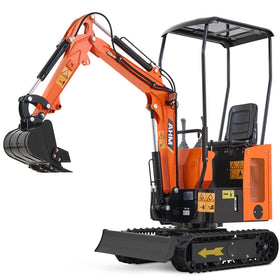
Starting a mini excavator business is similar to starting any other kind of business in that it is about building a reliable, profitable service that solves real problems for customers.
For a small mini excavator business, especially, your goal should be to try and position yourself as someone who can handle small-to-medium excavation jobs efficiently, safely, and affordably.
At the beginning, the focus is on getting consistent work, keeping costs low, and building a reputation. If you get those three right, everything else becomes easier to scale.

Step 1: Gain Relevant Experience and Knowledge
Before you spend money on equipment or register a business, you need to understand the business side of the mini excavator world. This must be the first step when starting a mini excavator business because it gives you access to the inner workings of the industry and allows you to build the skill and experience you will later need to satisfy your customers.
Do an Apprenticeship or work under a contractor
This is the best way to learn what it means to be an entrepreneur in the mini excavator business world. Working under a contractor allows you to learn the most intimate business secrets and practices, like:
- Pricing for mini excavator jobs.
- How machines are handled on-site.
- How unexpected problems are solved in real time.
An apprenticeship will also help you identify what the gaps in the market are and how you could potentially offer value when you start your own business. Doing an apprenticeship/working under an established contractor also helps you build trust and credibility with clients.
Do Some Equipment rental practice
Rent a mini excavator and practice on small personal or volunteer projects. This is an efficient way to improve your mini excavator handling skills and build up your competence as an operator. Practicing helps you:
- Get comfortable with controls
- Understand the limitations of the machine
- Learn basic digging, grading, and trenching techniques.
Remember, as a small mini excavator business, you will very likely be both the operator and the manager. These skills are crucial. Learn mini excavator rental costs and where you can rent them.
Practice With a Mini Excavator Can Help Your Business Later
Another important advantage of practicing with rental equipment is that it allows you to build up the competence to fill the market gaps you identify during your apprenticeship. Let's say there are only a few operators in your area who can dig trenches.
You can start practicing on your own private projects and mastering how to dig trenches with a mini excavator. This may become the core of your business when you launch.
Do online and certification courses
There are many practical benefits of doing an apprenticeship, but having official certification is very important when you are going into the mini excavator business. It gives you and your business a certain legitimacy, which may make a difference for certain clients.
- Also, if you were to get into any legal situations (which is quite common in business), you may need to establish your competence.
- Look for operator training programs that have formal training for safety procedures, the basics of soil handling, and equipment maintenance
Summary of Step 1.
In this stage, you are building the right foundation before stepping into the mini excavator business. Your goal is to become someone who can show up and get the job done right the first time.
Focus on machine control and precision, job site safety, basic excavation techniques (trenching, grading, leveling), time management (how long jobs actually take), and customer expectations.
 Step 2: Understand Legal Requirements and Insurance
Once you know the ins and outs of the mini excavator business and what to expect, the next step is making sure your business is legitimate and protected. The key is to focus on the right business structure, what licenses you need to legally operate, and what insurance policies are required.
Choosing the Right Business Structure
There are two main business structures open to a small mini excavator business: sole proprietorship and a Limited Liability Company (LLC). Choosing the right structure is very important because it affects your tax structure, the extent of your financial liability (in case you get sued), and how you operate financially.
Most small operators recommend an LLC because it separates personal and business liability.
2. Know What Licenses You Need
Without the proper licensing, the state can shut you down even before you start. Depending on your state or city, you may need:
- A general contractor’s license
- A specialty excavation license
- Local business permits
3. Get The Required Insurance
Insurance is a non-negotiable in the mini excavator business world. Insurance requirements for a small mini excavator business may vary from state to state, but you generally need three policies:
- General liability insurance (covers damage to property)
- Equipment insurance (protects your machine)
- Commercial auto insurance (if you’re transporting equipment)
Remember, excavation work carries real risk. One mistake without insurance can wipe you out financially.
Summary of Step 2
This step is crucial because it is a strong statement of intent. There is no need to set up legal structures if you are not sure you will stick with the business, but once you are serious, this step becomes critical.
 Step 3: Acquire the Required Equipment and Capital in a Smart Financial Way
When setting up a mini excavator business, equipment and capital are where you are most likely to make financially costly mistakes. In fact, many people overspend at this stage and end up with a machine that is not exactly appropriate or with little funds left to survive the first months/years in the business.
A smart strategy is to start by renting, and only buy your own mini excavator when you have new business on a stable and consistent basis.
Begin with Mini Excavator Renting
Renting mini excavators at the start of your business is a smart idea because:
- It gives you flexibility (only pay when you have jobs)
- It is more cost-effective because you pay a lower upfront cost.
- It also gives you enough time to figure out what machine size you actually need
- You also avoid getting stuck with monthly payments before you have a steady income.
Only buy a mini excavator when you have consistent work, you understand the size and type of equipment you need, and you can comfortably afford payments.
Buying a Mini Excavator for a Small Mini Excavator Business
There are many options when it comes to mini excavators for business, but most small businesses start with 2.5–5 ton mini excavators. What makes mini excavators within this range great for small businesses is that they are compact enough for residential jobs and powerful enough for trenching, grading, and light demolition.
When buying, look for reliability over brand hype, and get a unit with easy access to parts and service. Fuel efficiency is also another important fact, as it helps minimize operating costs in the long run. Consider a 2.5-ton mini excavator for a more affordable option for a small mini excavator business.
Don’t ignore support gear
Your excavator is just one part of the job. You’ll also need a trailer for transport, tie-downs and safety gear, and several basic tools (shovels, levels, compactors). These are what make you fully job-ready, not just machine-ready.
Explore Financing Options for Your Small Business
Explore mini excavator financing options like equipment loans, leasing, and even dealer financing. The key is to avoid overextending yourself early. Cash flow matters more than owning everything outright.
Step 4: Focus on High-Demand Services
A small mini excavator business thrives by doing specific, high-demand jobs well that are often ignored by larger companies. Target jobs that are frequent, quick to complete, low overhead, and easy to repeat. This is how you build a steady income.
High-demand services For Small Mini Excavator Businesses
| Utility Trenching | Residential Landscaping | Micro jobs | Drainage and erosion control |
| Water lines | Grading Yards | Fence post holes | French drains |
| Electrical Conduits | Digging for patios/retaining walls | Small digging projects | Swales |
| Drainage Systems | Land Clearing | Tree stump removal | Water runoff solutions |
- Utility trenching jobs are consistent and often require smaller machines.
- Residential landscaping is constantly in demand from homeowners
- Micro jobs like removing tree stumps may seem small, but they add up quickly and often have less competition.
- Drainage and erosion control are problem-solving jobs, and customers are always willing to pay for results.
Step 5: Marketing Your Business and Finding Work
To market a small mini excavator business, you do not need a massive marketing budget; what you need is consistent visibility and trust. You can rely on word of mouth, partnerships, and building an online presence.
- Word of mouth: This is your strongest asset early on. Do good work, be reliable, and communicate clearly. Happy customers bring repeat business and referrals.
- Partnerships: Build relationships with general contractors, landscapers, and even plumbers and electricians.
- Build an online presence: At a minimum, have a simple website or landing page, a business profile on Google, and photos of completed jobs. People want to see proof before hiring you.
- Local advertising: Post yard signs at job sites, flyers in your service area, and community boards. Keep it simple and visible.
 Final Thoughts
Starting a mini excavator business is less about the machine and more about how you approach the business itself. If you learn the work properly, set up your business the right way, control your costs, focus on high-demand services, and build strong relationships. You can turn a single machine into a steady, scalable income stream.
Take it step by step, stay practical, and focus on doing good work consistently; that’s what separates the businesses that last from the ones that don’t. Learn how to do a mini excavator rental cost vs buying cost analysis.