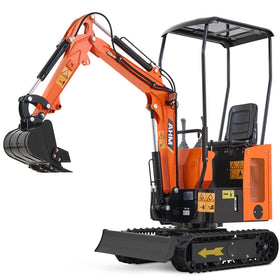
A mini excavator tipping over is rare, but not completely unheard of. In most cases, it comes down to one of three things: the machine itself, the operator, or the terrain. It is usually the case that the machine is poorly balanced, the operator is not handling it properly, or the ground is just too unstable, and the machine loses its balance.
The good news, though, is that your mini excavator tipping over is not typically a daily worry: It only becomes a real concern if you are working on uneven ground, lifting heavy loads, or pushing the machine beyond its intended limits.
These situations are predictable and preventable, and understanding why the tipping happens is the first step to avoiding it.
 Mini Excavator Tipping Over: Common Causes
Again, when a mini excavator tips over, it is usually a problem with the machine, operator, or terrain. Each one has its own level of risk and typically affects different types of users.
1. The Terrain is Uneven or Sloped
Mini excavators rely on a stable center of gravity. When you are operating on a slope or uneven ground, that balance shifts. If the center of gravity moves outside the machine’s track base, your mini excavator is very likely to tip.
Mini excavators tipping over on uneven or sloped terrain is relatively common. In fact, this is one of the leading causes of rollovers. So, if you are working on landscaping projects, trenching, or construction sites with hills, loose soil, or recently disturbed ground, you may want to watch out for this.
2. Overloading or Improper Lifting
Every mini excavator has a lifting capacity. When you exceed that capacity (or even lift within limits, but your position is poor), you destabilize the machine and bring it close to tipping.
It is very important to understand mini excavator weight limits. Even extending the arm too far when you are carrying a heavy load increases leverage, making it more likely for the machine to tip.
This is a moderate risk, especially for contractors, operators lifting materials, and anyone using attachments like grapples or augers, but it can get worse depending on how often you push the machine’s limits.

3. The Operator’s Technique is Poor
Inexperienced mini excavator operators often underestimate how quickly stability can change. Learning how to operate a mini excavator is important because even sudden movements, swinging heavy loads too quickly, or improper positioning can all shift the machine’s balance and cause it to tip.
This is moderate to high for beginners, including first-time users, DIYers, and anyone renting a mini excavator without formal training. For experienced operators, the risk is much lower.
4. The Machine is Positioned Incorrectly
Operating a mini excavator with the tracks not aligned properly, especially when digging or lifting to the side, greatly reduces its stability and may cause it to tip. Mini excavators are strongest when lifting over the front or rear, not the sides.
This is a rather common cause of mini excavators tipping over, especially on tight job sites. If you are an operator who works in confined spaces or near obstacles, this could be a really high risk.
5. The Ground Conditions are Unfavorable (Soft, Wet, or Loose Soil)
Even if the surface looks stable, soft or wet ground can give way under the weight of a mini excavator and cause it to tip because it causes one side to sink suddenly, shifting the center of gravity.
This is a rather situational risk, but it can be high if the area is muddy or recently excavated. If you are working in the after rain, near trenches, or on backfilled soil.
6. Mechanical Issues or Poor Machine Design
Mechanical issues like worn tracks, uneven weight distribution, or low-quality design can compromise the stability of a mini excavator and put it at risk of tipping over. Some smaller or cheaper mini excavators even have narrower track widths or less counterweight. Needless to say, you must handle those with care: the risk of tipping is inherently higher.
Generally, this is a less common risk of mini excavators tipping over, but it is still a factor, especially if your machine is older or poorly maintained. Explore the top 5 common issues with mini excavators.

How to Reduce the Risk of Your Mini Excavator Tipping Over
The benefit of understanding the causes of mini excavator tipping is that it puts you in a better position to come up with some practical ways to prevent it from happening. These four tips address the root of the problem and will reduce the risk of your mini excavator tipping:
1. Always Assess the Terrain First
Go through the terrain before you start operating and assess the ground conditions so you can identify the unstable areas to avoid. This is a basic but critical tip, especially for new operators.
2. Keep Loads Low and Close to the Machine
Keeping the load low reduces the shift in your center of gravity. Keeping it close minimizes leverage, which is a major tipping factor. A practical tip if you are lifting materials or using attachments.
3. Position the Machine Correctly
Operating over the front or rear aligns the load with the machine’s strongest and most stable axis. Crucial if you are an operator working in tight spaces or doing repetitive digging/lifting tasks.
4. Avoid Sudden Movements
Smooth, controlled movements prevent rapid shifts in weight that can destabilize the machine. This is especially important if you are a beginner or transitioning to a new machine.
5. Use the Tracks and Blade for Stability
Lowering the dozer blade and properly positioning the tracks increases your base of support and adds stability. Consider using this tip if you work on slopes or do heavy digging.
6. Get Proper Training (or Practice First)
Most tipping incidents come down to operator error. Getting proper training on how to operate a mini excavator helps you understand limits, balance, and safe operation. Formal training is highly recommended if you are a DIY user, renter, or new operator.
7. Don’t Push the Machine Beyond Its Limits
Respecting weight limits and operating guidelines keeps the machine within its designed stability range. This is a safety tip to keep at the back of our mind, especially if you are a contractor or a frequent user who relies on performance under pressure.
 Buying a Stable Mini Excavator: What to Look For
If you’re in the market for a mini excavator, stability should be one of your top priorities. Not all machines are built the same, and small design differences can have a big impact.
Here are the key features to focus on:
- A wide track base: A wider stance increases the machine’s footprint, improving balance and reducing the risk of tipping.
- Proper counterweight design: A well-balanced counterweight helps offset the load from the arm and bucket, keeping the center of gravity in check.
- Low center of gravity: Machines designed with a lower center of gravity are naturally more stable, especially on uneven terrain.
- Extendable undercarriage (if available): Some models allow you to widen the tracks for added stability when needed.
- Build quality and weight distribution: Heavier, well-built machines tend to be more stable than ultra-light models, especially during demanding tasks.
AHM Mini Excavators: Formidable Digging Efficiency with Stability and Reliability.
AHM mini excavators pack power, efficiency, and reliability in a compact size. With a wide range of small excavator attachments, these micro excavators safely boost productivity and easily complete excavation tasks while remaining stable and reliable on all surfaces.
The mini diggers feature tracks and wheels that allow easy maneuverability within tight working spaces without damaging the ground. As the best mini excavators backed by U.S.-based support, they’re the go-to choice for reliable performance on any job site.
Final Thoughts on Mini Excavators Tipping Over
A mini excavator can tip over, but it’s rarely a mystery when it happens. It almost always comes down to terrain, operation, or machine limitations.
The key takeaway is this: tipping is preventable. If you understand how balance works, operate within the machine’s limits, and choose the right equipment, the risk drops significantly.
Whether you’re a contractor or a first-time user, taking stability seriously isn’t just about protecting your machine; it’s about keeping yourself and everyone around you safe.
Consider the best mini excavators for landscaping and other projects.