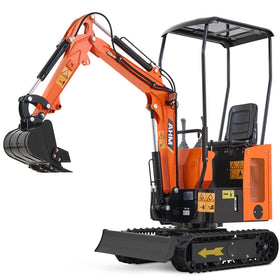
When you are thinking about splashing the big bucks on a mini excavator, or even if you already own one, one of the major concerns you are going to have is whether it should come with a title. Like with cars and other types of machinery, a title means undisputed ownership, legality, and peace of mind, especially when ownership changes hands.
So, understanding whether your mini excavators should have a title (and what replaces them when they don’t) definitely helps you avoid legal headaches, ownership disputes, or costly mistakes down the line.

Do Mini Excavators Generally Have Titles?
In most cases, mini excavators do not have titles. That’s because they are typically classified as off-road construction equipment, not road-going vehicles.
Titles are typically issued by state motor vehicle agencies, and those agencies focus on equipment designed to be registered, insured, and driven on public roads. Since mini excavators are meant for job sites, private land, and controlled environments, they usually fall outside that system.
How to Establish Legality and Ownership Without a Mini Excavator Title
The fact that mini excavators generally do not have titles does not mean that they are unregulated or “unofficial.” It simply means their ownership framework works differently from cars, trucks, or trailers.
Even without a title, there are about four reliable ways you can verify that a mini excavator is legitimate and legally owned.
1. Check the Bill of Sale
A bill of sale is one of the most important documents for equipment ownership, and it is probably the closest you can come to a title for a mini excavator.
A bill of sale typically contains vital information on the buyer, seller, machine details, purchase price, and date of transfer, and it creates a paper trail proving ownership. It is also relevant for other legal uses, including insurance, resale, or dispute resolution.
Reputable sellers should provide one automatically, but always request a signed bill of sale when purchasing.
2. Use the Serial Number Verification
Every mini excavator has a unique serial number stamped on the frame or identification plate. It should typically be found on a metal ID tag or stamped into the frame, commonly on the front right or left side of the machine, below the cab or near the boom base.
The serial number can also work in place of a title because it confirms the machine’s manufacturer, model, and production details, and even helps detect stolen equipment.
Ask the seller for the serial number and cross-check it with manufacturer records or theft databases when possible.
3. The Manufacturer’s Certificate of Origin (MCO)
For new mini excavators and more recent models, an MCO is sometimes provided by the manufacturer. The MCO is a decent replacement for a mini excavator title because it proves the machine’s origin and first ownership before it enters the resale market.
So, if you are buying new, request it from the dealer. For used machines, it may no longer be available, but that’s normal.
4. Use The Invoice or Purchase Receipt
Invoices and receipts show financial proof of the transaction, and they may also establish ownership and legality in place of title. Remember, an invoice supports ownership claims and may be required for tax or accounting purposes. Legitimate sellers should issue a detailed invoice at purchase.

Why Buying From a Trusted Supplier Matters
The most efficient way to avoid running into legal/ownership disputes when buying a mini excavator or any other kind of heavy equipment is to buy from a trusted supplier.
Established sellers, who have been in the business for a long time, like AHM Mini Excavators, not only understand documentation requirements but can also handle equipment sourcing properly.
At AHM mini excavators, we ensure legality in several ways:
- Our machines are legally sourced
- Serial numbers are verified
- Proper documentation is provided upon purchase
- Our customer support is available after the sale
Discover our best-selling AX-15 mini excavator with a Kubota engine, which runs quieter and lasts three times longer than typical B&S engines.
Tips for Verifying Online Mini Excavator Sellers
When buying a mini excavator online, always take a few extra steps:
- Look for clear business information (address, phone number, registration)
- Check reviews across multiple platforms
- Avoid sellers who refuse to share serial numbers or documentation
- Be cautious of prices that seem far below market value
Remember, if something feels off, it usually is.
Common Mistakes to Avoid When Buying a Mini Excavator
- Assuming a title is a must-have: Not having a title doesn’t automatically mean a machine is illegitimate. As long as you have a bill of sale, receipts, and the serial number checks out, you should be okay.
- Not checking the serial number: Always verify the serial number of the mini excavator. Failing to verify the serial number is one of the easiest ways to end up with stolen or misrepresented equipment.
- Buying based on price alone: If a mini excavator price looks too cheap to be true, it very likely comes with hidden issues: it may be mechanical problems, missing paperwork, or other legal risks.
- Not getting documentation in writing: Verbal assurances don’t hold up when legal disputes arise. Always get ownership details and agreements in writing.
 Final Thoughts on Mini Excavator Titles
Again, mini excavators generally don’t come with titles, and that’s completely normal. What matters is understanding how ownership and legality are established instead.
By verifying documentation, checking serial numbers, and buying from reputable suppliers, you can confidently own and operate a mini excavator without worrying about legal surprises. A little due diligence upfront goes a long way toward protecting your investment.
Explore some important tips on how to choose the best mini excavators for home use as you look to make the right purchase for your applications.