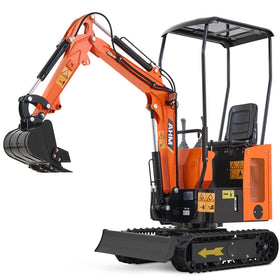
Buying a hydraulic thumb for mini excavator work means matching six critical specs to your machine and correctly operating it. In this guide, we’ll walk you through what matters when choosing a hydraulic thumb for excavator attachments.

Choosing Hydraulic Thumb for Mini Excavator: 6 Key Factors to Consider
1. Pin Spacing and Mounting Compatibility
Pin spacing determines whether the thumb physically bolts to your excavator's arm. For example, the AHM hydraulic thumb uses 3.6-inch (92mm) mounting hole spacing with 0.98-inch (25mm) pin diameter.
If the pin spacing is off by even 5mm means the thumb won't mount without welding custom brackets, wasting $150-300 on fabrication or return shipping.
What To Look For:
- Exact pin spacing (use calipers, not tape measures)
- Pin diameter: 0.98-1.18 inches for 1-2 ton excavators
- Number of locking pin holes (single vs three-hole designs)
- Mounting type (weld-on vs bolt-on)
2. Hydraulic Flow Requirements (GPM)
Hydraulic thumbs need 4-8 GPM from auxiliary hydraulics. Standard mini excavators deliver 10-20 GPM total - thumbs tap the auxiliary circuit providing 8-12 GPM. Too little flow slows closing speed by 30-40%, while excess flow overheats seals and damages components within 50-100 hours.
What To Look For:
- Excavator's auxiliary hydraulic GPM (check owner's manual)
- Thumb GPM requirements: Typically 4-8 GPM
- Auxiliary hydraulic circuit presence (not all excavators have this)
- Quick-disconnect couplers (5 minutes vs 20 minutes installation)

3. Thumb Length and Bucket Compatibility
Thumb length should be 70-85% of bucket width. A 22-inch thumb pairs with 24-30-inch buckets - too short leaves gaps, too long hits obstacles.
What to Look For:
- Measure bucket width first
- Calculate 70-85% of width (24-inch bucket = 18-inch minimum thumb)
- Opening angle: 120 degrees standard, 150+ for larger material
- Edge type: serrated grips round logs, smooth for flat materials
4. Construction Material and Durability
Thumbs use Q355 steel, manganese steel, or high-strength structural steel. Manganese resists abrasion 3-5x better than mild steel. Mild steel wears through in 200-400 hours of handling rocks daily. Manganese lasts 800-1,200 hours: the $50-100 cost difference saves $200-400 in replacements.
What to look for:
- Material spec (Q355, manganese, or high-strength steel)
- Weld quality at pivot points
- Replaceable wear pads (extend life by 30-50%)
- Serrated edge depth for grip
5. Hydraulic Cylinder Stroke and Force
Cylinder stroke determines maximum opening distance. A 120-degree opening with 25.6-inch spread handles logs up to 22-24 inches.
What to Look For:
- Maximum opening angle: Typically 120-150 degrees
- Maximum opening distance in inches
- Cylinder bore diameter (larger bore = more force)
- Cylinder quality (steel vs aluminum)

6. Hose Length and Fitting Compatibility
Hoses must reach from the auxiliary hydraulic outlet to the thumb - typically 32-59 inches for mini excavators. Short hoses (under 30 inches) restrict flow by 15-25% and fail within 100-200 hours. Long hoses (over 72 inches) snag on obstacles.
What to Look For:
- Measure outlet-to-thumb distance
- Thread size: M14×1.5 and M16×1.5 common
- Thread adapters if the fittings don't match
- Reinforced vs standard hose construction
Affordable Hydraulic Thumbs From AHM
1. The AHM Hydraulic Thumb Clip for 0-2 Ton Mini Excavators ($145.99)
The AHM Hydraulic Thumb Clip exhibits a remarkable grip on logs and rocks, ensuring stability with its non-slip serrated edges.
It is compatible with most mini excavators up to 2 tons. This versatile mini excavator thumb integrates seamlessly with your equipment, promising efficient performance across various jobs, from construction to forestry, landscaping, and demolition.
2. Hydraulic Thumb Clip Attachment
Designed for mini excavators with three locking pin holes on the arm, this Hydraulic Thumb Clip Attachment Thumb Clamp ensures effortless, quick installation with the included hydraulic hoses, screws, and clear instructions.
Crafted from high-quality steel and resistant to wear and rust, this durable hydraulic thumb clip excels in demanding tasks.

What Does a Hydraulic Thumb Do for a Mini Excavator?
A hydraulic thumb converts your bucket into a gripper that pinches irregular objects between the thumb and the bucket. Without a thumb, you're limited to scooping and pushing. With a thumb, you can grab rocks, logs, concrete chunks, and debris securely.
Common Applications:
- Log handling: Grabs logs 8-24 inches in diameter for moving cut trees
- Rock sorting: Picks individual rocks for landscaping or drainage work
- Demolition cleanup: Grabs concrete chunks and rebar that won't stay in buckets
- Brush clearing: Grips bundles of branches for transport to burn piles
Productivity Impact
- Material handling speed increases 30-50% versus bucket-only operation
- Loading 20 rocks: 45-60 minutes without thumb, 25-30 minutes with thumb
- Operator fatigue decreases 40% through precise first-attempt grabs
- Repositioning attempts drop from 3-5 tries to 1-2 tries per object
FAQ About Mini Excavator Hydraulic Thumbs
1. How much does a hydraulic thumb cost for a mini excavator?
Hydraulic thumbs for 1-2 ton mini excavators cost $150-500, with the AHM thumb at $145.99 including hoses and hardware.
2. Can you install a hydraulic thumb yourself?
Yes, installation takes 30-90 minutes if your excavator has auxiliary hydraulics - bolt on, connect hoses, check for leaks.
3. Do all mini excavators support hydraulic thumbs?
Most modern mini excavators (2015+) include auxiliary hydraulics, but older machines may need the circuit added professionally.
4. Hydraulic thumb vs mechanical thumb - which is better?
Hydraulic thumbs adjust continuously from the cab and increase productivity 25-35% over mechanical thumbs that lock in fixed positions.
5. What size hydraulic thumb do I need?
Multiply your bucket width by 0.75 for minimum thumb length (24-inch bucket needs 18-inch minimum thumb).
6. How long do hydraulic thumbs last?
Hydraulic thumbs last 1,000-2,000 hours with proper maintenance, or 1,500-2,500 hours with manganese steel construction.

Final Thoughts
Choosing the best hydraulic thumb for mini excavator work requires matching the pin spacing, GPM requirements, thumb length, material construction, cylinder specs, and hose compatibility.
Measure your excavator's mounting points, verify auxiliary hydraulic GPM output, and calculate thumb length based on bucket width before ordering. The AHM hydraulic thumbs provide verified compatibility for specific excavator models and come with included mounting hardware and hydraulic hoses.
Explore our guide on how to install a hydraulic thumb on a mini excavator.