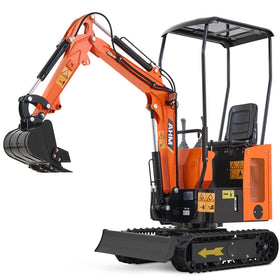
Construction equipment is measured in operating hours, not years. The difference between a 2,000-hour mini excavator and a 6,000-hour mini excavator isn’t simply age: it’s the gap between minimal maintenance requirements and the point where major component overhauls may be approaching.
Understanding these distinctions helps you protect and use your mini excavator more accurately, plan replacement cycles for a fleet, and recognize when a machine is nearing the end of its cost-effective service life.
How Many Hours Can a Mini Excavator Last?
Well-maintained mini excavators from quality manufacturers like AHM typically last 7,000-10,000 operating hours before reaching the end of their useful production life. Some machines exceed 10,000 hours with exceptional maintenance, while neglected equipment fails before 5,000 hours.

Average Mini Excavator Lifespan (Breakdown by Hours)
1. First 0-2,000 Hours: The "Like-New" Stage
- "Like-new" stage with peak performance, minimal repairs needed beyond routine maintenance (oil changes, filter replacements, greasing).
- Machines in this range command premium resale prices, typically 70-85% of new cost.
2. From 2,000 to 5,000 Hours: The "Manageable Wear" Stage
- Wear appears but remains manageable. Routine maintenance prevents issues. Rubber tracks may need replacement around 1,600 hours if used heavily.
- Pins and bushings show slight play but don't affect operation significantly. Machines trade for 50-65% of the new cost.
3. 5,000-7,000 Hours: The "Extensive Repairs" Stage
- More extensive repairs become necessary (track replacement, hydraulic pump service, pin and bushing replacements).
- Operating costs increase as components wear. Efficiency may decrease if maintenance is inconsistent. Resale value drops to 35-50% of the new cost.
4. 7,000-10,000 Hours: The "Whole Replacement of Parts" Stage
- Many components aside from the engine have required major repair or replacement. Machines still operate effectively with proper maintenance, but costs rise.
- Most contractors consider this the practical end of primary production use. Resale value is usually just about 20-35% of the original cost.
10,000+ Hours: Approaching the end of useful life.
- Most mini excavators start requiring repairs that exceed their remaining value.
- Some exceptionally maintained machines continue operating, but they're outliers rather than the norm.
Industry sources note that rental companies typically sell mini excavators around 1,500-2,500 hours, not because they're worn out, but to optimize resale value before major component wear happens.

What Is a Lot of Hours for a Mini Excavator?
Generally, 6,000+ hours represents high usage for mini excavators. At this point, machines need significant pin and bushing work, potential turntable service, and various component replacements.
- Many contractors trade machines around 2,000-2,500 hours to maximize resale value before wear accumulates.
- For buyers, machines under 3,000 hours with documented maintenance represent good value.
- Between 3,000-5,000 hours, expect some component wear but still plenty of useful life. Above 6,000 hours, budget for major repairs within 1,000-2,000 additional hours.
- Above 8,000 hours, you're buying primarily for parts or budget projects where breakdowns won't derail timelines.
How Many Hours Does a Mini Excavator Last? Key Factors Determining Lifespan
- Proper maintenance: Neglected machines fail before 7,000 hours, while well-maintained equipment exceeds 10,000 hours.
- Engine type: Diesel engines (Kubota, Yanmar) last 5,000-7,000 hours before major service. Gasoline engines require rebuilds around 1,500-2,500 hours.
- Operating intensity: Running hydraulic breakers, working in abrasive materials (rock, concrete), or operating at full capacity continuously, shortens the lifespan.
- Operator skill: Aggressive operation (slamming buckets into material, jerking controls, exceeding load limits) all accelerate component wear. Trained operators extend machine life by 20-30% through smooth, controlled movements and proper technique.
- Storage and environment: Machines stored indoors away from the weather last longer than outdoor storage. Extreme temperatures, moisture, and UV exposure degrade seals, hoses, and electrical components.
- Undercarriage maintenance: Tracks wear at different rates: steel tracks last 2,000-3,000 hours, rubber tracks 1,200-1,600 hours, depending on surface type and maintenance.
The most important factor that determines how long a mini excavator lasts is proper maintenance, especially in the early stages of use. As time goes on, the quality of the engine, the frequency and intensity of operation, and even the skill and dexterity of the operator begin to influence how many hours the mini excavator works.

Long-Serving AHM Mini Excavators for Big Projects
AHM AX-15 - $8,199.99
The AX-15 upgrades to a Kubota D722 diesel engine documented to exceed 5,000-7,000 operational hours - roughly three times the lifespan of gasoline alternatives. The water-cooled diesel maintains consistent operating temperatures during extended use, preventing the overheating issues that plague air-cooled gasoline engines.
1. The AHM AX-12B - $5,599.99
The AX-12B runs a Briggs & Stratton 25T2 engine that surpasses the CR Series standard lifespan by three times through forged crankshaft and Dura-Bore cast iron sleeve construction. At 2,138 pounds with a 69-inch digging depth, it handles residential excavation and light commercial work. It has an expected lifespan of 2,000-3,000 hours with proper maintenance
Conclusion
How many hours a mini excavator lasts depends on maintenance, engine type, and operating conditions. Well-maintained machines from quality manufacturers run 7,000-10,000 hours, with diesel engines outlasting gasoline by a roughly 3:1 ratio.
When buying used, prioritize maintenance records and physical inspection over low hours alone. A well-cared-for 5,000-hour excavator beats a neglected 2,000-hour machine.
For new purchases, a mini excavator with a diesel engine justifies the $2,000-3,000 premium if you plan 500+ annual operating hours, while gasoline suits occasional residential use under 200 hours yearly.
Explore AHM's best mini excavator with a Kubota engine for long service in both small and larger projects.