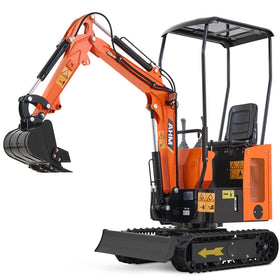
Skid steer loaders are among the most versatile machines on today’s jobsites. From construction and landscaping to farming and material handling, their compact size and powerful performance make them a go-to solution for a wide range of tasks. However, to get the most out of a skid steer loader, it’s essential to understand how to operate it correctly and safely. This guide walks you through the basics of skid steer operation—from understanding the machine to starting the engine and driving it with confidence.
Understanding the Basics of a Skid Steer Loader
A skid steer loader is a compact, engine-powered machine that uses lift arms to attach a wide variety of tools or attachments. What makes it unique is its steering system: the wheels or tracks on each side can move independently, allowing the machine to turn in place by “skidding” across the ground. To help you get familiar with the controls, here’s an example of the AHM skid steer loader control panel for you to have a basic understanding:


Pre-Operation Checks: What to Do Before Starting
Before starting a skid steer loader, taking a few minutes to inspect the machine can prevent breakdowns, accidents, and unnecessary wear.
Pre-Operation Checklist
- Check that you have donned personal protective equipment necessary for the task.
- Check that all buttons, switches, and control rods are off or at neutral positions.
- Check that this is no grime or grease that may compromise your balance on the operation platform.
- Check that the engine oil, hydraulic oil, and fuel meet the operating requirements.
- Check that the hydraulic system is free of any damage or leakage. Repair before operating.
- Check that your signalmen are in position and there are no other bystanders in the worksite.
Starting the Engine
Once inspections are complete, it’s time to start the skid steer.
Engine Start Steps
1. Check that the worksite is free of bystanders.
2. Check that the control rods, including the attachment control rod, are at their neutral positions. if not, make them so.
3. Locate the power switch, which should be on the right side of the control panel. Turn it to its ON position.

4. Locate the throttle handle. Hold its end, hold down the button located on top, and push the handle away from you.

5. Insert the ignition key and turn it to its ON position.

6. If you are operating at a high altitude or the specific conditions make it hard for the engine to start, pull the engine choke knob a little bit to facilitate the ignition. Remember to replace it when the engine has started.


7. The engine should be up and running. Do not operate yet. Allow it to run idle for a minute or so.
In colder conditions, allow extra warm-up time so hydraulic systems can reach proper operating temperature.
How to Drive the Skid Steer Loader
Driving a skid steer loader may feel different at first, especially for new operators, but it becomes intuitive with practice. In this guide, we use the AHM skid steer loader as an example—operation may vary with different machines, so always refer to your specific model’s user manual.
There are two control rods controling the moving and steering of the loader.
To drive forward, follow the steps as mentioned above to start the engine. Push them simultaneously forward and hold them there to move the loader forward. Once released, the loader will stop immediately.
To drive backward, follow the steps as mentioned above to start the engine or stop the loader by reinstating the control rods. Pull the rods simultaneously to move the loader backward. Once released, the loader will stop immediately.
Note:
- NEVER pull or push the rod abruptly when the loader is mobile in either direction.
- NEVER make sharp turns or starts when the loader is heavily loaded.
- DO NOT overload the bucket as this WILL damage the arm cylinders or even topple the loader.
Left Control Rod


Right Control Rod


Changing the Speed
The throttle handle ② , marked with a rabbit and turtle, controls the speed.
• To speed up the loader, push it away you.
• To slow down the loader, pull it towards you.
Honking
The horn will keep sounding if the horn’s switch ④ is not toggled back. Remember to reinstate it when honking is not needed.
Head Light
Toggle the switch ⑤ to use the headlight. Remember to reinstate it when it is not needed, especially when the engine is idling.
Operation Timing & Maintenance Tracking
Use the hour meter ⑥ to time and track your operation and maintenance schedule.

Emergency Shutdown
Turn the ignition key to its off position and turn the power switch to its off position.
Using Attachments Effectively
Forward: Pushing the rod ⑭ away from you (forward) extends the hydraulic attachment installed.
Backward: Pull the handle toward you (backward) resets the hydraulic attachment.
Neutral: When the rod is in neutral, the hydraulic pressure is relieved.
Note: NEVER attach or remove any hydraulic attachments unless the attachment
control rod has been set in neutral. Failure to do so can result in serious injury due to the
pressurized, high-temperature hydraulic oil.
Tips for Operating a Skid Steer More Efficiently
Efficiency isn’t just about speed—it’s about working smarter and reducing machine strain.
- Plan your work path to minimize unnecessary turns
- Match the machine size to the task at hand
- Avoid overloading, which can reduce control and cause damage
- Take breaks during long jobs to maintain focus and precision

High-quality skid steer loaders with responsive controls and reliable hydraulics—like those offered by AHM—can significantly improve productivity and operator comfort over time. For example, the AHM SS-380 23HP Mini Skid Steer Loader is designed for tough jobs in tight spaces. Compact at 45.3 inches wide and weighing 1,733 lbs, it can handle 30° inclines and speeds up to 3.7 mph. With a 6.2-foot lift height and an 826 lbs payload, it’s ideal for digging, hauling, and trenching on farms, in gardens, or warehouses. Plus, it works with attachments like Root Grapples, Stump Grinders, and Augers, offering unmatched versatility and power for a variety of tasks.
Conclusion
Operating a skid steer loader properly ensures tasks are completed safely and efficiently. With the right technique, you can handle real jobs like digging, hauling, trenching, and material handling with precision and control. A skid steer loader is a versatile, powerful tool that makes work on farms, construction sites, gardens, or warehouses faster and more manageable.